

Turkey is among the most successful countries in global medical tourism. As of 2026, the country’s medical tourism market is valued at $4.1 billion. What’s more is projected to reach $17.3 billion by 2035. This reflects sustained patient satisfaction at enormous scale. According to Global Market Insights, hair transplantation alone accounted for 51.9% of the country’s medical tourism revenue in 2025, making Istanbul the world capital of hair restorations. Turkey’s dental sector is projected to reach $5 billion, with dental tourism accounting for 70% of that figure. Cosmetic surgery, rhinoplasty, secondary surgeries and non-surgical aesthetics round out a portfolio that has made Turkey the destination of choice for patients from the UK, Germany, Scandinavia, and beyond.

Turkey’s provision of services at superior medical standards, its specialist doctors, and its robust medical education system contribute greatly to its success. Millions of medical tourists visit Istanbul each year to undergo a wide range of cost-friendly cosmetic procedures, primarily cosmetic dental procedures and hair transplants. However, while this revenue makes a contribution to the country’s economy, it unfortunately also leads to an increase in fraud cases. We’ve investigated how medical scams in Turkey occur, what cases exist, how to identify those scams, and how to file a lawsuit against medical fraud in Turkey.
Turkey is, without question, one of the greatest success stories in global medical tourism. As of 2026, the country’s medical tourism market is valued at $4.1 billion and is projected to reach $17.3 billion by 2035. This reflects sustained patient satisfaction at enormous scale. According to Global Market Insights, hair transplantation alone accounted for 51.9% of Turkey’s medical tourism revenue in 2025, making Istanbul the undisputed world capital of hair restoration. Turkey’s dental sector is projected to reach $5 billion, with dental tourism accounting for 70% of that figure. Cosmetic surgery, rhinoplasty, and non-surgical aesthetics round out a portfolio that has made Turkey the destination of choice for patients from the UK, Germany, Scandinavia, the Gulf, and beyond.
To be honest, there’s a truth in this industry that few people care to speak out loud: just like the rest of the world, medical scams are on the rise in Turkey. On one side, you have world-class surgeons and accredited hospitals that have spent decades mastering their craft. On the other, there are unlicensed, back-alley operators who lure people in with rock-bottom prices. These scammers don’t represent Turkish medicine; they are parasites feeding off its success. Worst of all, they aren’t just damaging our country’s reputation. They are putting people’s lives and health at irreversible risk. Now, we’re going to show you how to tell the real experts apart from the frauds and expose exactly how these scammers operate.
Check every point before booking any procedure in Turkey.
| Criteria | ✓ Legitimate Clinic | ✗ Red Flag |
|---|---|---|
| Surgeon Identity | Named surgeon, credentials publicly listed | Anonymous “team of experts,” no names |
| Medical Licence | Verified via Turkish Medical Association | No registration number provided |
| Accreditation | JCI or Ministry of Health certified | Claims cannot be independently verified |
| Pricing | Itemised written quote, no hidden fees | Suspiciously low all-in packages |
| Products Used | Named certified brands in writing | Refuses to name specific brands |
| Consultation | Proper assessment with the surgeon | Quoted via WhatsApp photo only |
| Who Operates | Board-certified surgeon throughout | Unlicensed technicians do the work |
| Sales Approach | No pressure, encourages second opinions | “Offer expires today” urgency tactics |
| Reviews | Detailed, verified across platforms | Generic 5-stars, stolen photos |
| Dental Planning | X-rays and 3D scan before any plan | Crowns recommended for healthy teeth |
| Hair Transplant | Realistic graft count after assessment | 5,000 grafts quoted sight unseen |
| Written Plan | Full plan provided before payment | Verbal promises only, rushed consent |
| Aftercare | Structured follow-up, responsive team | Unreachable after you fly home |
| How You’re Contacted | Found through research and reviews | Cold DM, street tout, unsolicited offer |
Did something go wrong during your first procedure? If you need a safe second procedure and skilled doctors, contact us right away. Let us create a personalized treatment plan for you at no cost.
This is the single most dangerous warning sign in the industry. When you visit a clinic’s website and cannot find the full name, qualifications, professional photograph, or registration number of the surgeon who will actually perform your procedure, leave immediately.
Legitimate clinics are built around their surgeons. Ethical practitioners publish their credentials openly, their training history, their professional memberships, their registration with the Turkish Medical Association (Türk Tabipleri Birliği) and bodies such as the ISHRS, ISAPS, or the Turkish Plastic Reconstructive and Aesthetic Surgery Association (TPCD)…
The ISHRS, the global authority on hair restoration surgery, has been documenting this problem for years. Its published research states plainly: “The vast majority of patients are having their procedures performed by technicians who do not have medical licences or surgical training.” In cases investigated by the ISHRS, one patient arrived for his procedure to find no surgeon present only a group of what he described as teenagers who performed the entire operation, from hairline design to graft placement, without a qualified doctor in the room.
In documented cases across Istanbul’s hair transplant sector, single nominal doctors have simultaneously overseen four or five procedures in separate rooms, appearing briefly at each to maintain the appearance of medical supervision while unlicensed staff did the actual work.
What to do: Always request the full name, registration number, and credentials of your surgeon before booking. Verify their registration independently through the Turkish Medical Association directory. If the clinic refuses or deflects, that is your answer.
Turkey offers genuine, legitimate savings. A hair transplant that costs £8,000–£12,000 in the UK can be performed by an experienced, board-certified surgeon in Istanbul for £2,000–£4,000. That gap reflects lower operating costs, currency dynamics, and competitive market efficiency not compromised quality.
But when a clinic offers the same procedure for $500, £700, or $1,000 including flights and hotel accommodation, the maths does not work. Someone is cutting corners. The only question is which corners.
The ISHRS has documented cases in which patients paid as little as €868 for a full hair transplant and found no qualified surgeon present whatsoever. The short-term saving proved catastrophic: overharvested donor areas that will never recover, unnatural hairlines, scarring, and deep psychological distress. In the dental sector, rock-bottom package prices for full-mouth veneers or implants that include accommodation and transfers almost invariably involve cheap materials, unqualified practitioners, or unnecessarily invasive procedures performed to maximise profit.
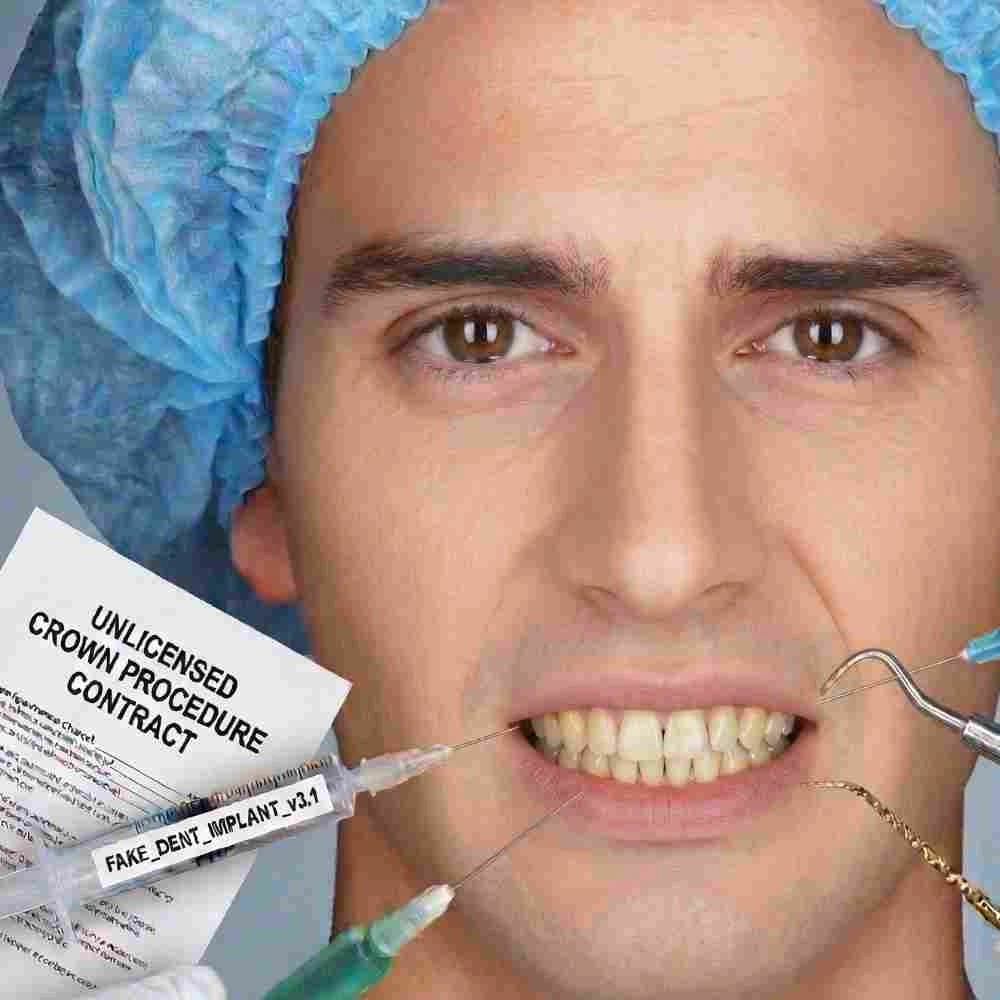
In 2025, the BBC investigated dental clinics across Turkey and found a significant number willing to recommend invasive crown treatment for patients who described having perfectly healthy teeth, a direct financial incentive to overtreat rather than preserve.
The rule: If the price is dramatically lower than every other reputable clinic you have researched, ask specifically why. A quality clinic will explain its pricing clearly and in writing. One that cannot should not receive your trust.
Online reviews are the primary research tool for most patients booking procedures abroad. Fraudulent clinics know this. Warning signs of fake reviews:
If a clinic’s patient coordinator is pushing you to confirm a booking, pay a deposit, or sign consent before you have had time to research thoroughly, consult independently, and ask every question you have that pressure is itself a red flag.
Investigative journalist Harry Wallop, who conducted an undercover investigation into Istanbul’s hair transplant clinics, observed that coordinators were “too happy to exaggerate the clinic’s claims and minimise any downsides” and in both clinics he visited, the doctors he spoke to directly contradicted promises made on the clinic’s own website by the sales team.
Common pressure tactics include: 24-hour-expiry pricing offers, claims that the surgeon’s diary is almost full, WhatsApp messages at unusual hours, and packages that “expire this week.” These are sales scripts. They are not medical advice.
What genuine clinics do: They encourage you to take your time, seek second opinions, and book only when you are completely certain.
A surgeon who agrees to perform a hair transplant, dental procedure, or cosmetic surgery based solely on photographs exchanged over a messaging app is not treating you as a patient. They are treating you as a booking.
The ISHRS documented a case in which a patient was immediately told they would receive 5,000 hair grafts without the clinic having seen a single image of the patient’s head. The appropriate number of grafts, the feasibility of the procedure, the suitability of the patient, none of this can be determined through a WhatsApp chat. It requires a proper clinical assessment: a physical or thorough video consultation with the operating surgeon, a review of relevant medical history, and an honest discussion of what is and is not achievable.
In dentistry, the equivalent is receiving a full quote for veneers or implants based on a selfie. Legitimate dental clinics require X-rays, 3D scans, and a clinical examination before creating any treatment plan. If a clinic quotes you a procedure and a price based on photographs alone, what they have created is a product to sell, not a treatment plan to heal.
Fake doctors and sham clinics have given rise to a scandal known as Turkey teeth. Especially on social media platforms like Twitter (or X), these teeth have become a laughingstock due to veneers and crowns that are unnaturally bright and completely out of proportion with a person’s mouth. These blindingly white teeth often don’t fit the patients’ facial features, leading to results that are far from aesthetic when they smile.
For instance, the story of 41-year-old Leanne, reported by BBC News in 2025, is a total nightmare. The implants she had done in Antalya actually pierced through to her sinuses and nose. She can barely breathe and is constantly battling chronic infections and severe pain. To make matters worse, fixing these mistakes is costing her far more than the original procedure. A similar story appeared in The Sun about another mother who came here because treatment was too expensive in her home country; she ended up with a swollen face, recurring sinusitis, and nosebleeds.
These stories don’t mean Turkey is a bad destination for dental work. Turkey is home to world-class, ethical clinics that do amazing work. However, what we’re describing here is the work of opportunistic fraudsters who grind down healthy teeth, use subpar materials, and vanish the moment the patient boards their flight back home.
Protection Tip
Before any dental procedure, ask your clinic for answers to the following in writing:
Ethical clinics welcome this scrutiny. Those with something to hide will not.
One of the most consistent patterns across documented cases of medical scams in Turkey is the disappearance of the clinic the moment a patient boards their return flight. WhatsApp messages go unanswered. Follow-up appointments that were promised in the sales process are suddenly unavailable. The coordinator who was messaging at midnight chasing a booking is unreachable when a complication arises.
This is not merely a breach of trust. Unfortunatelly, It has life-altering consequences. The UK Foreign Office has confirmed that the NHS is generally unable to provide corrective treatment for complications arising from private cosmetic procedures performed privately overseas, unless there is an identified acute clinical need. Patients who suffer complications frequently find themselves in a medical no-man’s-land too far from their Turkish clinic to access care there, and unable to access it at home.
A reputable clinic will provide a structured written aftercare protocol before discharge, emergency contact details, a named clinical point of contact for the weeks following your procedure, and a documented process for handling complications. If a clinic cannot tell you clearly what happens if something goes wrong after you return home, that is not a clinic you should trust.
Every legitimate clinic operating in Turkey is registered with the Turkish Ministry of Health. Plus, every licensed surgeon is registered with the Turkish Medical Association. JCI-accredited facilities maintain active, searchable listings on the Joint Commission International’s public database.
If a clinic’s name does not appear in these registries, if the address on their website leads to a residential building or a shared office space, or if claimed accreditations cannot be verified through the issuing body, these are warning signs.
Some fraudulent operators build elaborate, professional-looking websites with stolen photography, fabricated testimonials, and claimed certifications from bodies that either do not exist or have not issued the stated credential. Since May 2025, Turkish regulations now require all facilities offering services to international patients to register on the government’s HealthTürkiye portal, which combines licensing, price transparency, and quality monitoring. A legitimate clinic will be listed there. If it is not, ask why.
The difference between a Juvederm filler and an unbranded counterfeit. Between FDA-approved Botox and a fake alternative. Between a Straumann dental implant with decades of clinical evidence and an uncertified industrial-grade screw. These are not cosmetic distinctions, they are clinical ones with direct implications for your health and your treatment results.
If a clinic cannot tell you exactly which products, implant brands, or filler brands they use by name, the reason may well be that those products are not what you would freely choose. Reputable clinics display their brand partnerships openly and are proud to name them. It is a genuine competitive advantage. Clinics that deflect this question are hiding something.
This may sound almost absurd, but it is documented and real. During Harry Wallop’s undercover investigation, he was approached in Istanbul’s Grand Bazaar by a tea seller who offered to introduce him to someone for a hair transplant. Street-level intermediaries operating near tourist areas in Istanbul are known to direct visitors to unlicensed or low-quality clinics in exchange for referral commissions.
Exactly the same dynamic exists online. Unsolicited Instagram DMs, Facebook Messenger approaches, and cold WhatsApp messages offering deeply discounted procedures are recruitment tactics used by clinics that cannot attract patients through reputation alone.
No legitimate, quality clinic needs to recruit patients through street promotion, social media cold-messaging, or unsolicited approaches. The fact that a clinic uses these tactics tells you something important and definitive about the standard of care you would receive there.
The picture above is not a reason to avoid Turkey. It is a reason to choose carefully. The overwhelming majority of patients who visit accredited clinics in Istanbul leave with outstanding results. The following checklist is your framework for making sure you are among them.
1. Verify your surgeon’s registration. Check their name against the Turkish Medical Association’s register and any professional bodies they claim to belong to ISHRS, ISAPS, TPCD.
2. Confirm Ministry of Health licensing. Ask for the clinic’s licence number and verify it through official Turkish Ministry of Health channels.
3. Check JCI or ISO accreditation. Confirm current status directly on the Joint Commission International’s searchable public database. Claimed accreditation is not the same as verified accreditation.
4. Demand a detailed written treatment plan before committing. Procedures planned, products and brands to be used, surgeon’s name, and full aftercare protocol, all in writing before any payment is made.
5. Research reviews critically across multiple platforms. Google, Trustpilot, RealSelf, and What Clinic. Reverse image search before-and-after photos. Look for how the clinic handles negative feedback.
6. Have a proper consultation with your actual surgeon. Not a coordinator. Not a WhatsApp assessment. A thorough in-person or video consultation with the qualified surgeon who will perform your procedure.
7. Confirm your aftercare in writing. What happens if you have complications after returning home? Who do you contact? What does the clinic’s guarantee cover? A reputable clinic will answer every one of these questions without hesitation.
I did extensive research before choosing Vantage. Even before scheduling an appointment, I knew my surgeon’s name and qualifications. Nothing felt like a sales pitch, tbh they even explained the risks transparently.
Michelle O.
🇬🇧 United Kingdom
After reading horror stories online I was nervous, but from the first consultation the whole experience was professional and reassuring. My aftercare support after I got home was great, they were always available.
Kristin B.
🇩🇪 Germany
The clinic is modern, the staff speak perfect English, and most importantly, my results are exactly what was discussed.
Mortan M.
🇳🇱 Netherlands
Yes. Turkey has a legal framework for medical malpractice claims. You can file a complaint with the Turkish Medical Association (TTB), the Provincial Health Directorate, or pursue civil litigation through Turkish courts.
Yes, when you choose correctly. Turkey has 42 JCI-accredited hospitals, internationally trained surgeons, and a government-regulated health tourism sector generating over $4 billion annually. The overwhelming majority of patients leave with excellent results. The risk comes not from Turkey itself, but from a minority of unlicensed, unregulated operators who exploit the country’s reputation.
Ask the clinic for your surgeon’s full name and Turkish Medical Association registration number, then verify it independently at ttb.org.tr. For plastic surgeons, check membership with the Turkish Plastic Reconstructive and Aesthetic Surgery Association. For hair restoration, look for ISHRS membership. For dental surgeons, verify through the Turkish Dental Association.
Contact your Turkish clinic immediately, a reputable clinic will have a dedicated aftercare line. For emergencies, go to your nearest A&E. For non-urgent complications, contact your GP and explain the treatment received.
Facial Surgeries — A clear breakdown of procedures, options, and what to expect during your facial transformation.
Body Surgeries — Essential details and factors influencing your body contouring and reshaping options.
Scalp Surgeries — Explore comprehensive options and techniques for your hair restoration and scalp goals.
Breast Surgeries — A complete, in-depth guide covering every step of the breast enhancement journey from start to finish.
Blogs — Stay informed with the latest insights, cost guides, and expert advice on aesthetic procedures.
WhatsApp us