

Derma fillers are all the rage these days. They have become the go to solutions for improving your facial expression and giving you an impressive look. Injectable Calcium Hydroxylapatite Fillers or CaHA’s for short, are such derma fillers which are used to decrease the look of wrinkles, add smoothness and volume to several areas of skin. CaHA Fillers are non-permanent long term solutions which allow patients to not only rejuvenate their skin with added collagen but also contour without invasive operation.
Prepared by the Vantage Editors
Clinically reviewed by the Vantage Team of Doctors.
Updated on September 13, 2026.
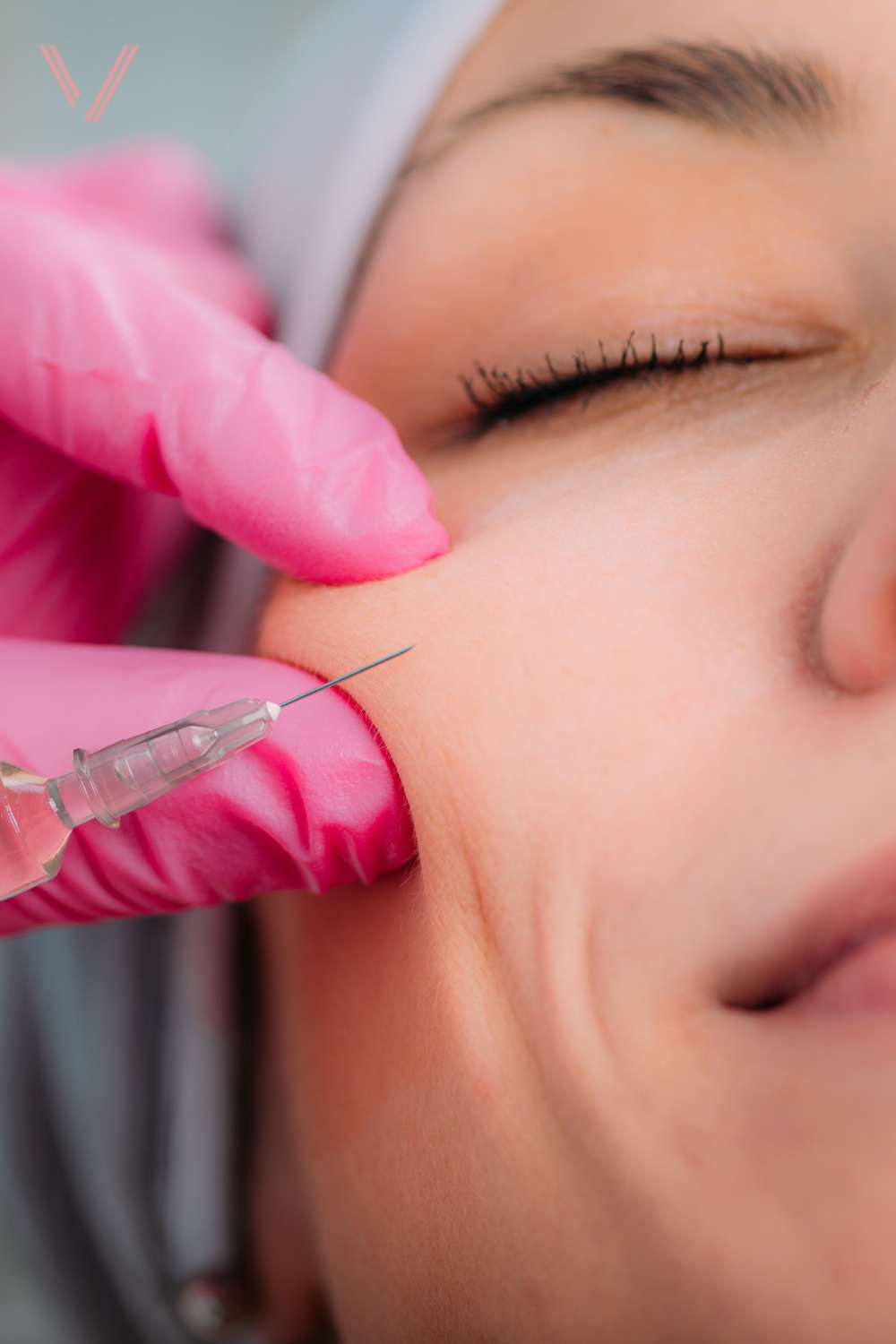

Calcium Hydroxylapatite Injections or CaHA as they are called are dermal fillers that help alter the effects of aging and/or desired look. Though not permanent they are long term solutions making them minimally invasive and thus preferred by many. They are also organic as they are composed of compounds found naturally in bones and teeth making them biocompatible. CaHAs are used for contouring the jawline and the cheeks. Compared to other types of fillers like hyaluronic acid CaHA’s offer more structure and firmness and are known to improve the texture of the skin, elasticity and skin barrier.
Though not permanent, CaHA fillers last up to 12-18 months and they are by far the most popular choice amongst patients as they are durable and amongst other fillers they are the best for longevity without changing the structure of the face. CaHA fillers allow patients to seemingly alter their facial structure.
Calcium Hydroxyapatite is derived from compounds that already exist in our bones and teeth. CaHA’s biocompatibility makes their adherence to the body quicker and stronger. The filer is designed to give volume and increase collagen production.
The CaHA is designed as a gel-like format with calcium-based microspheres that are administered to the area to create a plumbing effect. As the gel allows the skin by smoothing the surface and the wrinkles it also settles in and overtime the area slowly absorbs the filler which stimulates collagen production in the area. In this sense CaHA’s are just like scaffolds which not only renews the foundation but also deepens the foundation.
CaHA’s have been most preferred by patients who want to smooth and enhance deep wrinkles on their faces like nasolabial folds, contouring the cheeks and the jawline. Due to its thick consistency areas where the skin is thinner and more sensitive like around the lips and under the eyes CaHA’s are not the ideal choice but they are safe nonetheless.
The longevity of results for CaHA fillers vary from person to person. Not only can it be affected by some environmental factors like extreme heat or humidity but it also has to do with genetics and/or metabolism. However they usually last somewhere between 12 to 18 months. Depending on various factors there may be one or several touch up appointments which will definitely alter the longevity of the results for the better.
CaHA is short for calcium hydroxylapatite fillers composed of compounds that are naturally in the structure of our bones and teeth. Unlike other fillers which mainly consist of hyaluronic acid and aims to simply add volume, CaHA’s are designed to support collagen production and patients are able to get results gradually which allows the body to acclimate and have a more natural shift to the desired look.
Unlike other fillers CaHA’s have a gel-like consistency which means they are more dense thanks to their rich calcium particles. This means with CaHA’s, skin texture and surface improve over time as the filler settles in making them safer and long-term.
Hyaluronic Acid (HA): Naturally occurring sugar molecule matrix that binds water molecules to provide immediate volume and tissue hydration, lasting 6 to 12 months, making it best suited for lips, under-eye tear troughs, fine lines, and dynamic facial areas.
Calcium Hydroxylapatite (CaHA): Biocompatible calcium microspheres in a gel carrier that provide an immediate structural lift and gradually stimulate collagen synthesis, lasting 12 to 18 months, making it best suited for jawline contouring, deep nasolabial folds, cheek enhancement, and hand rejuvenation.
Poly-L-Lactic Acid (PLLA): Synthetic, biodegradable polymer microparticles that trigger a gradual biological response to stimulate deep collagen production over time, lasting 18 to 24+ months, making it best suited for broad volume restoration, hollow cheeks, and overall skin structure rebuilding.
PMMA (Polymethylmethacrylate): Non-resorbable microspheres suspended in a collagen gel that create a permanent structural matrix encapsulated by the body for long-term support, offering semi-permanent or permanent longevity, making it best suited for severe facial wrinkles, deep folds, and acne scar correction.
Individuals who want to reduce the look of wrinkled and sagging skin on their face can seek out calcium hydroxylapatite (CaHA) fillers. CaHA’s are the most appropriate for individuals who want to restore some volume to their face and maybe alter their look to fit a more desired look without committing to it. They are also a perfect match for patients who want non-permanent but long-lasting results and particularly those who are looking for a bit more than what hyaluronic acid fillers offer.
However, injectable calcium hydroxylapatite fillers are not suitable for patients who want to volumize the skin under eyes and or around lips due to CaHA’s thick consistency.

CaHA fillers are thicker than most fillers, particularly hyaluronic acid fillers. This makes them the most suitable for areas where the skin needs volume and elasticity. The areas where there are wrinkles and the skin elasticity is lost CaHA can help restore the volume by promoting collagen production. CaHA is particularly good for parts of the skin that folds like the nasolabial folds, the marionette lines and the skin may need some structure like the chin and the jawline.
The common face zones that are often preferred by patients for CaHA are cheeks, chin, jawline, forehead, hands and nasolabial folds around the mouth. These are areas that can benefit from the thick gel like consistency and the collagen production that the CaHA filler can help stimulate.
CaHA fillers are perfect for filling the folds between the nose and the corners around the mouth which are often referred to as nasolabial folds. Wrinkles can get deep and over time may appear harsher. CaHA fillers add volume to this area and deter any further sagging.
Patients who want to further pronounce their contours can opt to get calcium hydroxylapatite or CaHA’s on their jawline and chin. CaHA fillers help enhance the contours and add volumes to these areas in a natural way and patients can enjoy their refined facial structures for long periods of time.
Where do we show the most sign of aging? Our faces naturally reveal the signs however our hands also bear the marks. That is why CaHA fillers can also be used to reverse the clock on our faces and hands. Strategic injections to zones in the temples create volume and lifting while smoothing the skin. In the hands CaHA fillers can mask veins and promote collagen for a smooth and youthful skin.


As calcium hydroxylapatite fillers aim to smooth aging and sagging skin they are usually ideal for when the skin elasticity is compromised. Typically;
As it is the case with any cosmetic treatments patients who are not in their optimal health are advised against getting fillers. A good candidate for a calcium hydroxylapatite filler is one that has realistic expectations and knows the limits of what CaHA fillers can do. Likewise patients who want long-term solutions without the downtime or recovery should consider CaHA for its added benefits.


Calcium hydroxyapatite promises a long-term, organic and minimally invasive treatment plan! With CaHA fillers the areas patients want to be highlighted or augmented are naturally and painlessly done so with the added benefit of natural collagen production. Over the course of months the area with the filler will benefit from the boost collagen production in the area as the thick gel-like filler is slowly absorbed. The reason why the area becomes smoother and the skin elasticity is improved is because the thick gel slowly dissolves and thanks to the collage newer tissue replaces the old. Cheeks could be lifted, jawline could be contoured and hand veins could be masked with the help of CaHA fillers.
As it is a minimally invasive treatment, calcium hydroxylapatite fillers are pretty safe and require no downtime. Some common reactions may include some mild and temporary redness or tenderness in the area for which the patient can ask their doctor for a prescription of ibuprofen. If the skin is inflamed and extremely itchy than the patient might be having an allergic reaction. As the CaHA is biocompatible thus it is prone to allergies however patients with hypersensitivity may be uncomfortable as the body adjusts. Make sure to partake in regular check-in in order to guarantee a smooth transition period.
CaHA fillers stand out from HA and PLLA fillers thanks to their immediate volume and long-term biostimulation effects. The subtle differences in the procedure flow and the recovery are as follows:
CaHA features a dense, gel-like matrix of calcium-based microspheres. When injected beneath the skin, it establishes a micro-level scaffold that instantly lifts the tissue. This structural density provides a more stable and defined posture, particularly in areas requiring firm contours such as the jawline and the back of the hands.
There are no surgical incisions or scars. Normal symptoms after procedure are mild redness, swelling. tenderness around the injection sites. Mild pain relievers recommended by your physician (such as ibuprofen) and gentle cold compresses make the recovery process smooth and comfortable.
Fibroblast activity accelerates around the microspheres, generating new type collagen fibers. During this phase, the tissue naturally evolves from its initial firmness into a soft, flexible, and organic skin texture.
Some fillers like PLLA requires post-session massage protocols. However, people do not need any post-op treatments after CaHa filler in Turkey. CaHa proceeds with single or controlled touch-up sessions; because of its rapid biocompatibility, patients can return to their daily routines immediately with zero social downtime.
Yes calcium hydroxylapatite fillers aka calcium fillers are safe. They are made from compounds that already exist in our bone and teeth structure and are minimally invasive making them a safe cosmetic treatment option.
Hyaluronic fillers consist of hyaluronic acid that naturally exists in our bodies. They are thinner and more mild and are perfect for areas where the skin is thinner like the eyes and the lips. CaHA fillers or calcium hydroxylapatite fillers are composed of bio-compounds that exist in our bone and teeth structure and are thicker in consistency, CaHA fillers are applied to areas where there are deep wrinkles and are usually longer lasting than HA fillers.
CaHA fillers take a while to settle into the natural structure of the face thus being patient with them is important. However as they settle in and boost collagen production in the area they are also more natural looking with long-term benefits.
CaHA fillers are thicker and denser in consistency due to the calcium and collagen enhancing compounds they possess. In areas where the skin is thinner they are harder to absorb and thus would not look flattering as the material takes some time to settle. That is why areas where the skin is thinner like the lips and the eyes are not suitable for CaHA fillers.
Calcium hydroxylapatite treatments or CaHA fillers are non-invasive treatment options that are administered directly to the area of choice. Some numbing cream or anesthesia may be applied to ease the discomfort of a needle. However as they stand the calcium hydroxylapatite treatment is not painful at all and have little to no recovery time.
1. Loghem J van, Yutskovskaya YA, Philip Werschler W. Calcium Hydroxylapatite: Over a Decade of Clinical Experience. Journal of Clinical and Aesthetic Dermatology. 2015;8(1):38–49.
2. Alam M, Gladstone H, Kramer EM, et al. ASDS Guidelines of Care: Injectable Fillers. Dermatologic Surgery. 2008;34(S1):S115–S148.
3. U.S. Food and Drug Administration (FDA). Radiesse Dermal Filler — Summary of Safety and Effectiveness Data.
4. Moers-Carpi M, Vogt S, Santos BM, et al. A multicenter, randomized trial comparing calcium hydroxylapatite to two hyaluronic acids for treatment of nasolabial folds. Dermatologic Surgery. 2007;33(S2):S144–S151.
✦ Non-Surgical Overview: Non-Surgical Procedures — Explore our comprehensive range of minimally invasive treatments designed to refresh, lift, and contour your features with zero downtime.
✦ Collagen Stimulation: Poly-L-Lactic Acid Therapy — Learn how this advanced biostimulator works beneath the skin to rebuild your body’s natural collagen framework for long-lasting structural rejuvenation.
✦ Hydration & Volume: Hyaluronic Acid Treatments — Discover how biocompatible hyaluronic acid gels restore deep skin moisture, plump fine lines, and recreate youthful facial contours naturally.
✦ Semi-Permanent Enhancement: PMMA Fillers in Istanbul — Understand how polymethylmethacrylate microspheres provide long-lasting volume and structural scaffolding for deep wrinkles and severe folds.
100% confidential consultation with our medical experts
WhatsApp us