
Endoscopic breast is a term that refers to specialized technique for performing certain breast surgeries using an endoscope. Endoscope is a thin surgical instrument with a camera. That’s why, it is not the name of a single surgery, but rather the name of a surgical approach.
In endoscopic breast surgery technology:
Published by: Vantage Editors
Updated: Sep, 2026
Reviewed & performed by: Vantage Clinic Surgeons
In this method, the surgeon uses an endoscope to perform selected breast procedures through tiny incisions. Rather than making a long incision across the breast, surgeon works through narrow entry points, e.g. the underarm area, to create a surgical pocket and remove tissue with precision. The camera gives the surgeon a clearer view in order to make it easier to work carefully. As the camera improves visibility, the operation can be performed with less scarring and tissue trauma, and a shorter post-operative period than with traditional techniques.
It is not a standalone operation. Instead, it’s a surgical approach used in specific breast procedures where small incisions and improved visualization offer real advantages. This method is most commonly used for:
The most common use of the endoscopic breast technique is in breast augmentation surgeries. Instead of making an incision under the breast, a small incision is made in the armpit. With the help of an endoscope, a pocket is prepared for the implant. The advantage is that there is no scar on the breast and the scar remains in the armpit.
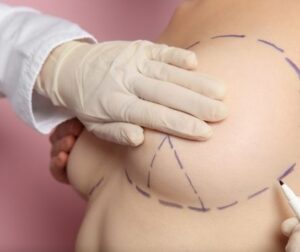
There is currently no endoscopic version of breast reduction surgery. Breast reduction involves removing excess tissue and skin, and because these procedures are too extensive to be performed with endoscopic instruments, they are generally not preferred.
Mastopexy procedure requires the removal of excess breast skin. It is not suitable for endoscopic procedures. So, there is no such thing as an “endoscopic breast lift.”

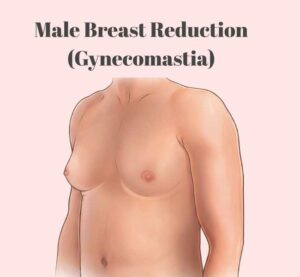
Yes, the endoscopic method can be used for gynecomastia. Glandular tissue and fatty tissue can be removed through an incision under the armpit. It is chosen because it leaves less scarring.
Endoscopic breast augmentation is the best-known use of this technique. The surgeon inserts the breast implants through a 1 or 2 cm incision in the armpit to avoid leaving any visible scars.
Yes. When performed by an experienced plastic surgeon, endoscopic breast augmentation offers similar safety, with the added benefit of improved precision. The endoscope helps the surgeon avoid bleeding points and identify anatomical structures more clearly. The goal of both surgeries is to reduce breast size (cc). Because it is an endoscopic method that leaves little scarring, it attracts more interest from women.
The endoscopic technique used for gynecomastia (enlargement of breast tissue in men) may be better for patients with glandular enlargement whose condition requires targeted treatment.
Endoscopy-assisted gynecomastia procedures involve the steps below:
The possibility of long and wide scars in open and traditional breast surgeries does not exist in endoscopic surgeries. Because the camera enlarges the field of view, the surgical incisions are much smaller.
The potential for a successful surgery increases because the doctor's field of view will be wider. Therefore, it can provide more precise results.
Because the incisions are small, there are fewer risks of side effects and infection. This allows patients to heal faster and experience fewer problems during the post-operative period.
| Duration: | 1 – 2 hours | Daily life: | 1 – 2 weeks |
| Hospital Stay: | 0-1 night | Exercise: | 4 – 6 weeks |
| Anaesthesia: | General | Full recovery: | 4 – 6 weeks |
Breast endoscopic surgeries carry potential risks. While some risks can be prevented with early precautions during the recovery process, others must be taken more seriously as they can lead to permanent consequences.
There will be swelling. It will decrease significantly within 1 week, but the remaining slight swelling may be more persistent. It will go down as the edema subsides.
Bleeding may occur during the first few days; your doctor will inform you about this. However, in unusual situations such as persistent bleeding or excessive bleeding, you should go to the hospital immediately.
If wounds are not cared for properly, they can become infected. Consult your doctor as soon as you suspect an infection.
Implants may be misplaced during or after surgery (displacement). This is usually caused by sudden movements, incorrect sleeping positions during recovery, etc. If you suspect this may be the case, schedule a doctor’s appointment while you are still in the healing process. Unfortunately, if the misplacement persists after healing, you may need a second surgery.
Some breast surgeries require skin to be removed or reshaped, which cannot be done through small incisions. Consequently, the endoscopic method is not suitable for the following procedures:
– Breast reduction
– Breast lift (mastopexy)
– Areola reduction surgery
– Breast reconstruction involving flap techniques
For patients with less excess tissue, the endoscopic method can efficiently remove gland and fat through small cuts.
The endoscopic approach is most effective for patients with firm, elastic skin, as it cannot tighten large amounts of loose skin.
Some breast surgeries require skin to be removed or reshaped, which cannot be done through small incisions. Consequently, the endoscopic method is not suitable for the following procedures:
In most cases, it is a cosmetic procedure, especially when used for:
However, endoscopic techniques are also used in other medical fields such as thoracic surgery, endocrine surgery, and some reconstructive operations.
To be honest, completely scarless breast augmentation isn’t realistic. But in Turkey, you can have breast augmentation with scars that small and short, nearly invisible. Thanks to endoscopic tools, surgeons can work through small incisions.
Yes, Turkish surgeons are popular worldwide for aesthetic procedures. They also achieve good results in endoscopic breast surgery.
Dowden RV. The endoscopic transaxillary submuscular breast augmentation: Clinical techniques and outcomes. Clinics in Plastic Surgery, 1995.
Ho Quoc C, Meruta A, Piat J, et al. Endoscopic transaxillary breast augmentation: A 10-year experience and objective analysis of the learning curve. Aesthetic Surgery Journal, 2016.
Serletti JM, Moran SL. Endoscopic Breast Surgery: Advanced techniques and mastery of surgical approaches. Lippincott Williams & Wilkins, 2014.
Kim WS, Chung MS, Kim HK. Endoscopic-assisted mastectomy and immediate breast reconstruction for breast cancer patients. Scientific Reports, 2021.
Yang SY, Jeon SY, Seo HK, et al. Comparison of surgical outcomes between endoscopic-assisted and traditional transaxillary breast augmentation. Journal of Plastic, Reconstructive & Aesthetic Surgery, 2018.
Losken A, Burke RW. Endoscopic techniques in breast surgery: An anatomical and clinical review. Plastic and Reconstructive Surgery Global Open, 2015.
Breast Surgeries — Discover comprehensive surgical options and modern techniques tailored to help you reach your aesthetic objectives.
Nipple Areola Surgery in Turkey — Discover a wide range of corrective options tailored to help you achieve your aesthetic objectives.
Fat Transfer Breast Augmentation in Turkey — A comprehensive, detailed resource walking you through every phase of the natural enhancement process from beginning to end.
100% confidential consultation with our medical experts
WhatsApp us